High-risk underwriting has never been more demanding.
Payment providers today face increasing pressure from regulators, card networks, sponsor banks, and merchants themselves. At the same time, many underwriting teams are still spending significant amounts of time on tasks that don’t actually require underwriting expertise.
Reviewing product pages. Checking disclaimers. Verifying age gates. Looking for prohibited terms. Comparing website content against compliance requirements.
These activities are important, but they are not the highest and best use of an underwriter’s time.
The most effective risk organizations are finding ways to automate routine compliance reviews so their teams can focus on what humans do best: evaluating risk, identifying emerging threats, and making informed decisions.
Website Monitoring Shouldn’t Be a Manual Process
A merchant may look compliant during onboarding, but websites change constantly.
New products are added. Marketing language evolves. Shipping policies are updated. Entire categories can appear on a site without anyone notifying the processor.
Historically, the only way to identify these changes was through periodic manual reviews. The problem is that by the time someone notices an issue, the exposure may have already existed for weeks or months.
Continuous website monitoring changes that model.
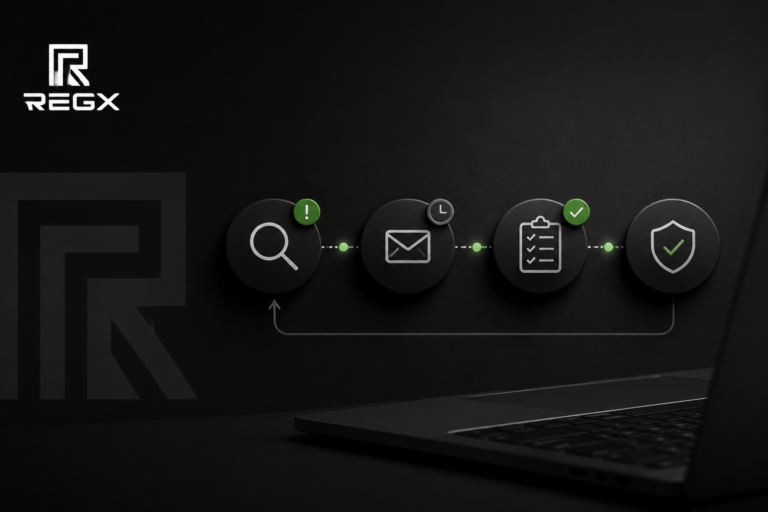
Instead of relying on scheduled reviews, compliance systems can automatically scan merchant storefronts and identify meaningful changes as they happen. Underwriters are alerted only when something requires attention, allowing them to spend less time searching for problems and more time evaluating them.
Product Reviews Are Better Handled by Technology
Many high-risk portfolios contain thousands of products spread across hundreds of merchants.
Manually reviewing every product page is not only time-consuming, it’s difficult to perform consistently at scale.
Automated product scanning can identify restricted products, prohibited ingredients, banned keywords, and policy violations across an entire portfolio in minutes.
Rather than reading every product page individually, underwriting teams can focus on the merchants and products that present actual risk.
The result is faster identification of issues and more efficient use of underwriting expertise.
Compliance Validation Should Be Continuous
Many compliance checks are repetitive by nature.
Is the required disclaimer still present?
Is the age gate functioning properly?
Are shipping restrictions being enforced?
Has a prohibited term appeared somewhere on the website?
These questions often require the same review process over and over again.
Automation allows these controls to be monitored continuously instead of periodically. When something changes, the system flags it. When everything remains compliant, the underwriter doesn’t need to spend time verifying the same information repeatedly.
Risk Prioritization Matters More Than Risk Collection
One of the biggest challenges facing underwriting teams today isn’t finding data.
It’s determining which data deserves attention.
Modern compliance platforms can continuously evaluate merchant activity and assign risk indicators based on predefined rules and behaviors.
Instead of reviewing every merchant with the same level of scrutiny, teams can prioritize the cases that deserve investigation.
This allows underwriters to focus their attention on emerging risks, unusual behavior patterns, and complex merchant relationships rather than routine compliance checks.
Underwriters Create Value Through Judgment
Technology is exceptionally good at identifying patterns, monitoring websites, and enforcing predefined rules.
What it cannot do is replace professional judgment.
Underwriters are responsible for understanding context, evaluating business models, identifying nuanced risk factors, and making decisions that balance growth with risk management.
Those responsibilities become harder to execute when large portions of the day are consumed by manual compliance reviews.
By automating routine monitoring and validation tasks, organizations allow underwriting teams to focus on the work that has the greatest impact on portfolio performance.
The Future of High-Risk Compliance
As high-risk portfolios continue to grow, manual compliance processes become increasingly difficult to sustain.
The solution is not less oversight. In many cases, the answer is more oversight—delivered through automation.
Continuous monitoring, automated product reviews, compliance validation, and risk prioritization give underwriting teams better visibility while reducing repetitive work.
The organizations that succeed in high-risk payments will not be the ones conducting the most manual reviews.
They will be the ones that use technology to surface the right issues at the right time, allowing their experts to focus on the decisions that truly require human judgment.
The organizations that succeed in high-risk payments will not be the ones conducting the most manual reviews. They will be the ones that use technology to surface the right issues at the right time, allowing their experts to focus on the decisions that truly require human judgment.
RegX helps payment providers achieve exactly that by continuously monitoring merchant activity, automating compliance controls, and surfacing the risks that require human attention—so underwriting teams can focus on managing risk rather than searching for it.