Many payment professionals assume that a healthy portfolio is simply one with low chargebacks and stable processing volume.
While those metrics matter, they only tell part of the story.
In reality, some of the strongest-performing portfolios contain merchants operating in industries traditionally labeled as “high-risk.” The difference is not the category itself—it’s how effectively risk is identified, monitored, and managed over time.
For acquiring banks, payment processors, PayFacs, and ISOs, understanding what a healthy high-risk portfolio actually looks like is becoming increasingly important. As regulators, card brands, and banking partners place greater emphasis on compliance and operational oversight, portfolio health extends far beyond financial performance.
High-Risk Does Not Mean High Exposure
The term “high-risk” often creates confusion.
A merchant selling products in a regulated industry may be classified as high-risk during underwriting, but that does not automatically make them a dangerous merchant to support.
Conversely, a merchant that appeared low-risk during onboarding can quickly become a significant source of exposure if its business practices change after approval.
Portfolio health is less about the merchant’s category and more about whether risk remains visible after onboarding.
Healthy portfolios prioritize continuous oversight rather than relying solely on static underwriting decisions.
Strong Portfolios Have Visibility Into Merchant Behavior
One of the most common weaknesses in high-risk portfolios is the lack of visibility after merchant approval.
Many underwriting teams spend significant time reviewing applications, websites, and supporting documents during onboarding. Once the merchant is approved, however, monitoring often becomes limited to chargebacks, complaints, or periodic reviews.
By the time those indicators appear, exposure may already exist.
Healthy portfolios maintain ongoing visibility into:
- Product catalog changes
- New website content
- Marketing claims
- Compliance disclosures
- Age-verification controls
- Geographic sales restrictions
- Prohibited products and categories
The goal is not simply to identify problems. The goal is to identify changes before they become problems.
Portfolio Diversification Matters
A healthy high-risk portfolio is rarely concentrated around a single industry, product type, or risk profile.
Concentration risk can create significant challenges when regulations change, card network rules evolve, or banking partners adjust their risk appetite.
The strongest portfolios balance growth across multiple merchant segments while maintaining consistent compliance standards.
Diversification helps reduce dependency on any one vertical while creating greater resilience during periods of regulatory uncertainty.
Merchant Growth Should Not Outpace Oversight
Growth is often viewed as a sign of portfolio success.
However, rapid growth without corresponding compliance monitoring can create hidden exposure.
As merchants expand, they frequently introduce:
- New products
- New fulfillment models
- New marketing channels
- New geographic markets
- New customer segments
Each change creates potential compliance implications that may not have existed during onboarding.
Healthy portfolios scale monitoring alongside merchant growth rather than assuming yesterday’s review remains valid indefinitely.
Chargebacks Are a Lagging Indicator
Many organizations still rely heavily on chargeback ratios to evaluate portfolio health.
The problem is that chargebacks typically appear after a risk event has already occurred.
By the time disputes begin increasing, the underlying issue may have existed for weeks or months.
Healthy portfolios focus on leading indicators, including:
- Website modifications
- Policy changes
- Product launches
- Compliance violations
- Marketing language changes
- Transactional anomalies
These indicators provide earlier signals that allow risk teams to act before problems reach card networks, regulators, or banking partners.
Compliance Should Be Operational, Not Reactive
One of the defining characteristics of healthy high-risk portfolios is that compliance becomes part of daily operations.
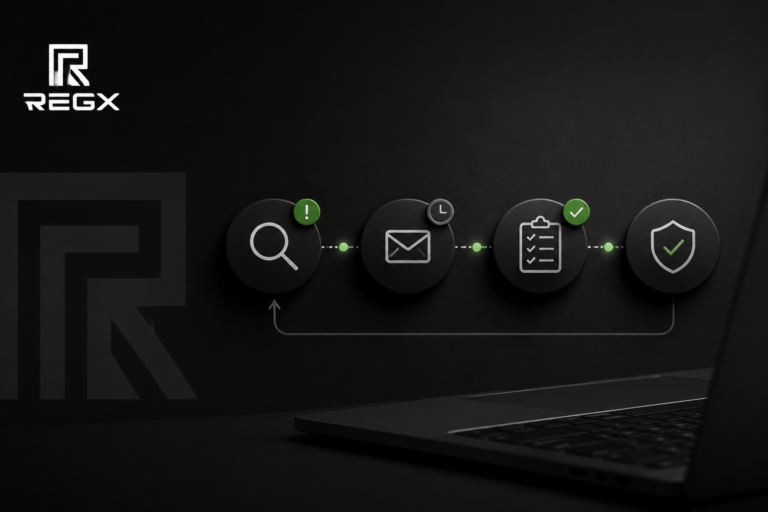
Instead of relying on manual reviews triggered by complaints or audits, leading organizations implement continuous monitoring processes that operate across the entire merchant portfolio.
This creates a proactive compliance environment where violations can be identified and addressed quickly.
The result is reduced exposure, stronger banking relationships, and greater confidence when expanding into complex merchant categories.
The Best Portfolios Create Trust
Ultimately, portfolio health is about trust.
Banks need confidence that processors understand their merchants.
Processors need confidence that merchants remain compliant after approval.
Card networks need confidence that risks are being managed effectively.
And merchants need confidence that they can grow without creating unnecessary exposure for themselves or their partners.
When visibility, monitoring, compliance, and risk management work together, high-risk portfolios become significantly more predictable, scalable, and sustainable.
The Future of Portfolio Health
The most successful acquirers, processors, ISOs, and PayFacs are moving beyond traditional underwriting models.
Instead of viewing risk as a point-in-time decision, they treat risk management as a continuous process.
As high-risk commerce continues to evolve, portfolio health will increasingly be measured by an organization’s ability to identify changes, monitor compliance, and prevent exposure before it occurs.
That is where transactional compliance becomes a critical layer between underwriting and enforcement—helping risk teams maintain visibility across their portfolios long after merchant approval.
At RegX.ai, we help processors, PayFacs, ISOs, and acquiring banks monitor merchant activity continuously, identify emerging compliance risks, and maintain healthier portfolios through automated transactional compliance and risk intelligence.