For most acquirers, compliance reviews begin during underwriting.
A merchant submits an application, supporting documents are reviewed, the website is checked, and a risk decision is made. Once approved, the merchant enters the portfolio and begins processing transactions.
The challenge is that merchant behavior rarely stays static.
Products change. Marketing language evolves. New categories are added. State regulations shift. Entire business models can change months after the original underwriting review.
By the time a manual portfolio review identifies a problem, the acquirer may already be exposed to regulatory scrutiny, card network violations, excessive chargebacks, or reputational risk.
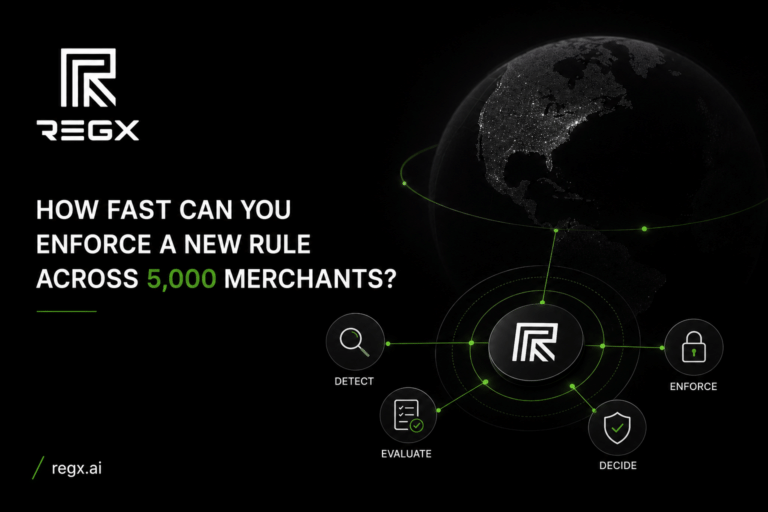
This is why leading acquirers are moving toward automated compliance monitoring.
The goal is not simply to identify violations faster. The goal is to continuously verify that merchants remain compliant after approval.
Why Manual Reviews No Longer Scale
A portfolio containing hundreds or thousands of merchants generates an enormous amount of compliance data every day.
Each merchant website may update product pages, modify claims, add new SKUs, launch promotions, or expand into new jurisdictions.
Reviewing these changes manually is difficult, expensive, and often reactive.
Even teams with experienced risk analysts typically review only a fraction of portfolio activity.
As a result, many violations are discovered only after an external trigger occurs:
- A chargeback spike
- A consumer complaint
- A regulator inquiry
- A card network investigation
- A sponsor bank review
At that point, the exposure already exists.
What Automatic Compliance Detection Looks Like
Modern compliance monitoring systems continuously analyze merchant activity across multiple risk layers.
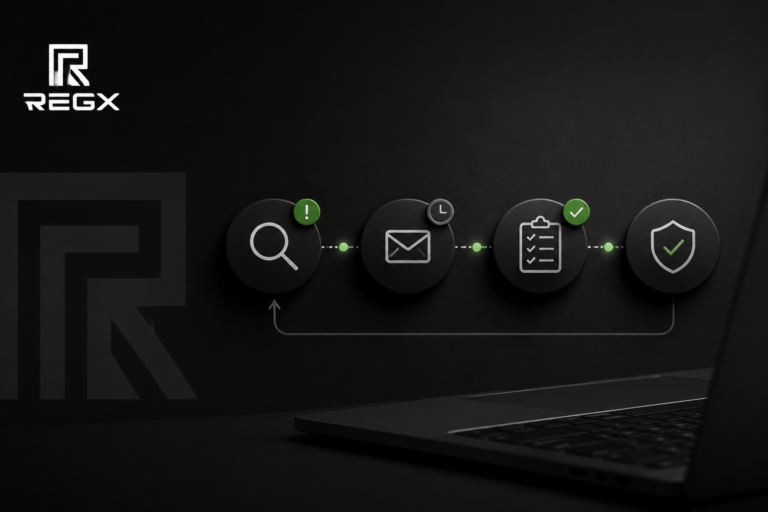
Instead of waiting for annual reviews or periodic audits, monitoring occurs automatically as changes happen.
The most effective systems focus on several key areas.
Website Monitoring
Merchant websites often provide the earliest indication of emerging risk.
Automated monitoring can detect:
- Newly added products
- Changes to product descriptions
- Restricted product categories
- Prohibited marketing claims
- Missing disclosures
- Altered age-verification controls
- State-specific compliance issues
When a violation appears, alerts can be generated immediately rather than months later.
Product Intelligence
Many compliance risks originate from inventory changes.
A merchant that was approved for one product category may later introduce products that create additional regulatory exposure.
Automated product monitoring can identify:
- Newly listed products
- Restricted substances
- Regulated ingredients
- Emerging high-risk categories
- Category mismatches against approved underwriting profiles
This allows acquirers to identify portfolio drift before it becomes a larger problem.
Transactional Compliance Monitoring
Traditional compliance programs often focus on what merchants say.
Transactional compliance focuses on what merchants actually do.
This includes analyzing:
- Transaction patterns
- Shipping destinations
- Geographic restrictions
- Age-restricted sales requirements
- Processing activity inconsistent with approved business models
Because transaction activity reflects real merchant behavior, it often reveals risks that website reviews alone cannot detect.
Detecting Risk Before Enforcement
One of the biggest misconceptions in compliance is that enforcement creates risk.
In reality, enforcement usually reveals risk that has already existed for weeks or months.
The strongest compliance programs focus on identifying exposure before regulators, card networks, or sponsor banks discover it.
Automatic monitoring shortens the gap between violation and detection.
Instead of discovering a problem during a quarterly review, an acquirer can identify it within hours.
That difference can significantly reduce portfolio exposure.
Building a Continuous Compliance Model
The industry is moving away from a point-in-time underwriting model toward continuous compliance oversight.
Underwriting remains critical, but approval should be viewed as the starting point of risk management—not the finish line.
Continuous monitoring allows acquirers to:
- Detect violations earlier
- Reduce manual review workloads
- Improve portfolio visibility
- Support regulatory examinations
- Demonstrate proactive risk management
- Reduce exposure across high-risk merchant segments
As merchant portfolios become larger and regulatory expectations continue to increase, automated compliance detection is becoming less of a competitive advantage and more of an operational requirement.
The Future of Merchant Compliance
The question is no longer whether compliance violations will occur within a portfolio.
The question is how quickly they can be identified.
Acquirers that rely solely on manual reviews will continue operating with significant blind spots. Those implementing automated compliance monitoring gain the ability to detect risk as it emerges, rather than after exposure has already accumulated.
Platforms like RegX.ai help acquirers, ISOs, PayFacs, and payment processors continuously monitor merchant activity, detect compliance violations automatically, and identify emerging risks before they escalate into larger portfolio issues.