Regulatory change is accelerating across financial services, payments, and high-risk industries. New rules, enforcement priorities, and regulatory guidance appear faster than most organizations can realistically implement them.
Compliance teams are expected to adapt immediately. Systems, policies, and monitoring procedures are expected to reflect new requirements almost as soon as they are announced.
In practice, this creates a fundamental challenge: regulatory change moves faster than traditional compliance infrastructure.
This gap is where many organizations still rely on attestations—but the industry is increasingly moving toward real-time enforcement models.
Understanding the difference between these approaches is becoming critical for modern risk management.
The Reality of Regulatory Velocity
Regulatory frameworks are no longer static.
Agencies release new interpretations, update enforcement priorities, and refine expectations on a continuous basis. Payment networks introduce rule adjustments. Banks revise underwriting policies. State and federal authorities introduce new compliance requirements.
For compliance teams, this creates an operational problem.
Implementing regulatory updates across onboarding procedures, transaction monitoring systems, merchant policies, and reporting structures takes time. Even large organizations cannot instantly reconfigure their systems every time guidance changes.
As a result, the industry has historically relied on attestation-based compliance models.
The Attestation Model: A Practical but Imperfect Solution
Attestations are widely used across financial services and regulated industries.
In this model, organizations certify that they comply with a set of rules or requirements. These certifications are often provided during onboarding, periodic reviews, or annual audits.
Attestations allow institutions to operate while implementation catches up with regulatory expectations. They provide a documented representation of compliance intent and operational alignment.
However, attestations have an inherent limitation.
They represent a point-in-time declaration, not continuous enforcement.
Between attestations, business operations may evolve, websites change, products are updated, and risk exposure can shift without immediate detection.
This is why regulators and banking partners are increasingly pushing organizations to move beyond static certifications.
The Rise of Real-Time Compliance Enforcement
As regulatory expectations grow, the industry is shifting toward systems that monitor and enforce compliance continuously.
Real-time enforcement models rely on automated monitoring, dynamic rule application, and ongoing verification of operational behavior.
Instead of relying solely on attestations, organizations can detect when conditions change.
For example, automated systems can identify when a merchant website updates product listings, when transaction patterns shift beyond expected thresholds, or when compliance documentation becomes outdated.
These signals allow compliance teams to respond earlier and maintain stronger oversight across their ecosystems.
The result is not just better risk management—it is also improved transparency for banks, partners, and regulators.
Why Attestations Still Matter
Despite the growth of automated compliance systems, attestations are unlikely to disappear entirely.
They remain an important part of regulatory processes because they formalize accountability and establish documented commitments from businesses.
In many regulatory frameworks, attestations are still required for licensing, onboarding, and program participation.
However, the role of attestations is evolving.
Instead of serving as the primary mechanism for demonstrating compliance, they increasingly function as a governance layer on top of operational monitoring systems.
Organizations attest to policies, while technology verifies that those policies are consistently enforced.
Bridging the Gap Between Policy and Enforcement
The real challenge for modern compliance programs is bridging the gap between regulatory intent and operational execution.
Policies can be updated quickly. Enforcement mechanisms often cannot.
This is where centralized compliance infrastructure becomes essential.
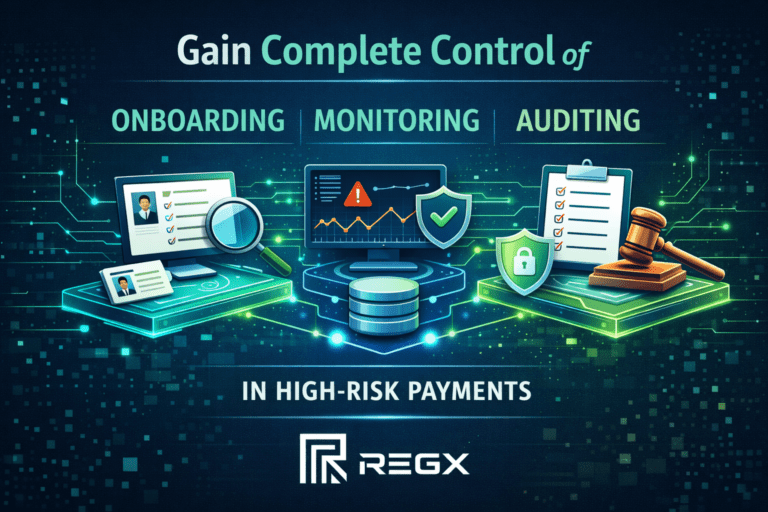
By combining onboarding controls, continuous monitoring, and automated auditing capabilities, organizations can reduce the lag between regulatory change and operational enforcement.
Platforms like RegX.ai are designed to address this gap by allowing compliance teams to translate regulatory rules into automated monitoring and enforcement workflows.
Rather than relying solely on periodic certifications, organizations gain the ability to observe and enforce compliance in near real time.
The Future of Compliance Is Continuous
Regulation will continue to evolve quickly. That trend is unlikely to slow down.
For organizations operating in complex or high-risk industries, the question is no longer whether compliance systems must adapt—it is how quickly they can do so.
Attestations will continue to serve as formal commitments, but they are no longer sufficient on their own.
The future of compliance lies in continuous oversight, automated monitoring, and real-time enforcement frameworks that keep pace with regulatory change.
Organizations that adopt these models will be better positioned to maintain trust with regulators, banks, and partners as the regulatory landscape continues to evolve.
As regulatory expectations continue to evolve, organizations need systems capable of keeping pace with change. Attestations will always play a role in documenting intent, but sustainable compliance increasingly depends on the ability to monitor and enforce rules continuously. RegX.ai was built with this reality in mind—helping organizations bring onboarding, monitoring, and auditing into one environment where compliance can be observed and enforced as conditions evolve.