A sponsor bank audit can quickly expose something many ISOs, PayFacs, and payment companies already know: approving a merchant is only the beginning.
The real question is what happened after approval.
Did the merchant change its website? Add new products? Introduce prohibited claims? Begin selling into restricted jurisdictions? Was the issue detected? And, perhaps most importantly, can you prove what controls were in place when transactions were processed?
That is where a portfolio audit becomes more than a compliance review. It becomes a test of how much you actually know about the merchants generating transactions through your program.
What Is a Sponsor Bank Looking For?
The exact scope will depend on your program, merchant categories, risk profile, and agreement with the bank. But broadly, a sponsor bank wants confidence that the portfolio it supports is operating within the parameters it agreed to underwrite.
That can mean looking beyond merchant applications and onboarding files.
The bank may want to understand how merchants are reviewed after approval, how changes are identified, how exceptions are handled, and what happens when a merchant no longer meets requirements.
For higher-risk or regulated categories, the scrutiny can become much more granular.
A merchant may have been compliant when it entered the portfolio six months ago. That does not necessarily tell the bank what the merchant is selling today.
The Audit Question That Becomes Difficult to Answer
Imagine an auditor identifies a questionable transaction from three months ago.
The transaction itself is only one piece of the puzzle.
Now you may need to answer:
What was the merchant selling when that transaction occurred?
That can lead to several other questions:
- Was the product permitted?
- What did the product page say at the time?
- Was the buyer located in an allowed jurisdiction?
- Were the required restrictions being enforced?
- Had the merchant recently changed its website?
- Had your organization identified any previous issues with that merchant?
- What action was taken, and when?
- Why was the transaction allowed to proceed?
This is where traditional portfolio oversight can become difficult.
If your compliance evidence consists primarily of onboarding documents, periodic screenshots, spreadsheets, emails, and manual review notes, reconstructing the circumstances surrounding a historical transaction can require significant work.
And sometimes the necessary evidence simply does not exist.
An Audit Is Also a Test of Your Controls
A strong compliance program should not depend on someone remembering what happened.
It should be able to demonstrate it.
Sponsor banks need confidence that merchant oversight is systematic rather than reactive. That means showing how compliance requirements are applied across the portfolio and how identified risks affect actual commerce.
There is an important difference between saying:
“We review our merchants.”
and being able to demonstrate:
“This merchant, product, buyer location, and transaction were evaluated against these requirements at this point in time.”
The second answer gives the bank something much more useful: evidence.
Why Periodic Reviews Leave Important Questions
Periodic merchant reviews still have a role, but digital businesses can change much faster than traditional review cycles.
A merchant can add a product today.
Marketing language can change tomorrow.
A restricted ingredient can appear in a new SKU.
A product that is permitted nationally may become restricted in a particular jurisdiction.
By the time the next scheduled review occurs, transactions may already have taken place.
This creates a fundamental problem for portfolio oversight: compliance reviews and transaction activity are happening on different timelines.
For an auditor, knowing that a merchant passed a review at some point is useful. Knowing why a specific transaction was permitted is much stronger.
From Merchant Monitoring to Transaction-Level Evidence
This is where transactional compliance changes the audit conversation.
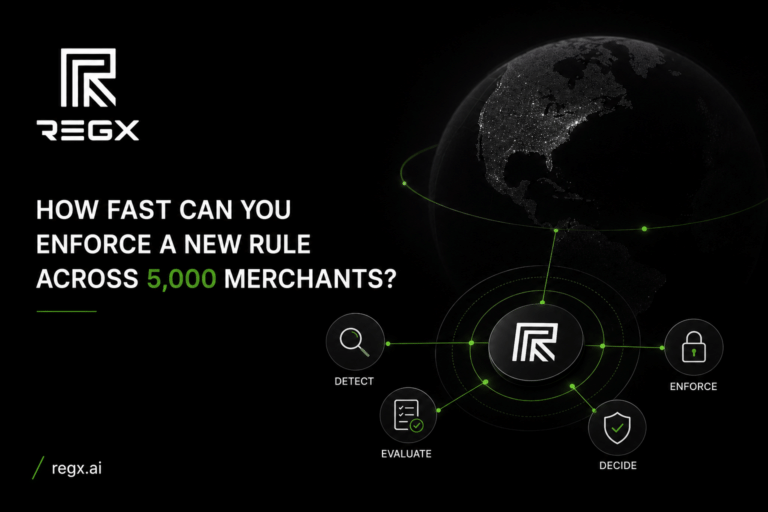
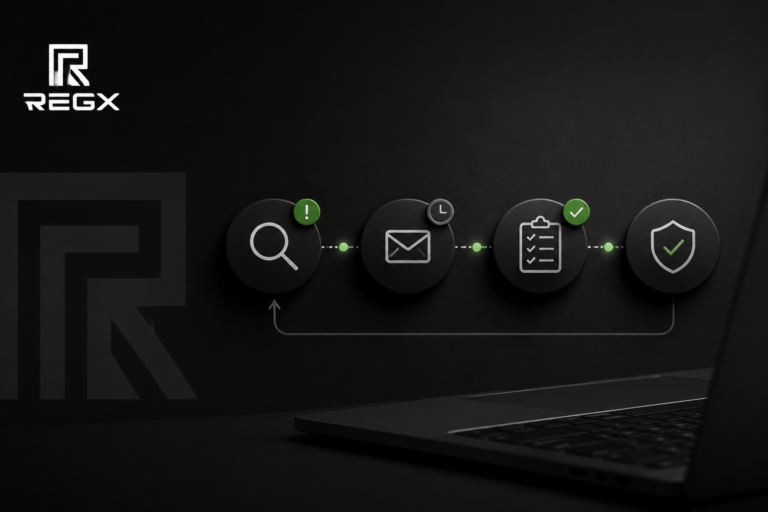
Instead of treating compliance exclusively as a merchant-level status—approved, flagged, suspended—transactional controls can evaluate whether the conditions required for a transaction are satisfied before that transaction is allowed to proceed.
That creates a clearer connection between policy and payment activity.
For example, an organization can establish controls around:
Product eligibility: Is the product permitted under the applicable program?
Geography: Can that product legally or contractually be sold to the buyer’s location?
Merchant status: Is the merchant currently operating within program requirements?
Required documentation: Are necessary licenses, certificates, or supporting documents current?
Transaction conditions: Does the transaction meet the rules established by the acquiring program?
The result is not simply another alert for a compliance team to investigate later. It is a record of the compliance decision associated with the transaction.
What This Changes During an Audit
When a sponsor bank asks about a merchant or transaction, the compliance team should not have to reconstruct months of activity manually.
Instead, it should be able to show the relevant compliance history and the controls that were applied.
That can significantly change the audit process.
Rather than searching through emails, screenshots, spreadsheets, and old review tickets to explain why something happened, the organization can provide a structured record of how its controls operated.
The conversation moves from:
“We believe this merchant was compliant.”
to:
“Here is the evidence showing the controls that were applied.”
That distinction matters.
Audits Reveal More Than Individual Merchant Problems
An audit finding is rarely important only because of one merchant.
If one prohibited product remained active for months, the bigger question is whether the same weakness exists elsewhere in the portfolio.
If one geographic restriction was not enforced, the bank may want to know whether that control failed across other merchants.
If documentation expired without detection, the issue may point to a broader process problem.
Sponsor banks are not only evaluating individual merchant behavior. They are evaluating whether the systems supporting the portfolio can consistently identify and control risk.
That makes audit readiness a portfolio architecture issue—not simply a documentation exercise.
Build the Audit Trail Before the Audit
The worst time to create evidence is after someone asks for it.
For ISOs, PayFacs, acquirers, and other payment organizations supporting complex merchant categories, audit readiness should be built into the way transactions are evaluated every day.
That is the approach behind RegX.
RegX provides transactional compliance infrastructure that helps payment organizations apply merchant, product, geographic, and regulatory requirements before transactions occur while maintaining an auditable record of those decisions.
So when a sponsor bank asks, “Why was this transaction allowed?”, your team does not have to reconstruct the answer.
The evidence is already there.